Coastal Tanzania . Blue Economy
Innovating with the ocean,inspiring change
SeaBlue Innovators partners with women and youth to transform Tanzanian seaweed into products, sources of livelihood, and healthier coastal ecosystems.
Location
Kunduchi
Model
Restorative aquaculture
Restorative aquaculture
Restorative aquaculture connects livelihoods with ocean recovery.
SeaBlue grows seaweed in ways that restore marine ecosystems while building fair, resilient incomes for coastal communities.
Seaweed farming
Innovative deep-sea farming and Off-bottom Methods
Ecosystem restoration
Farms are managed to help reefs and marine life recover.
Inclusive markets
Harvests reach fair markets as premium, natural products.
Community ownership
Value and decision-making stay with the communities.

Our story
Building prosperity with the ocean, not at its expense.
SeaBlue began in 2023 at Kwale Island, when founder Farhiya Elmy saw coastal communities living beside enormous ocean wealth yet capturing little of its value. SeaBlue exists to close that gap.
What we do
Four pillars, one connected system.
Impact snapshot
Early progress, honestly measured.
0+
Women and youth engaged
0
Coastal Geographies
0
Flagship projects
0ha
30 by 30
Where we work
Rooted along the Tanzanian coast.
Dar es salaam
Kunduchi
In this Farm Location is where the deep sea farms are located
In motion
Projects in motion.
SEA FARMERS
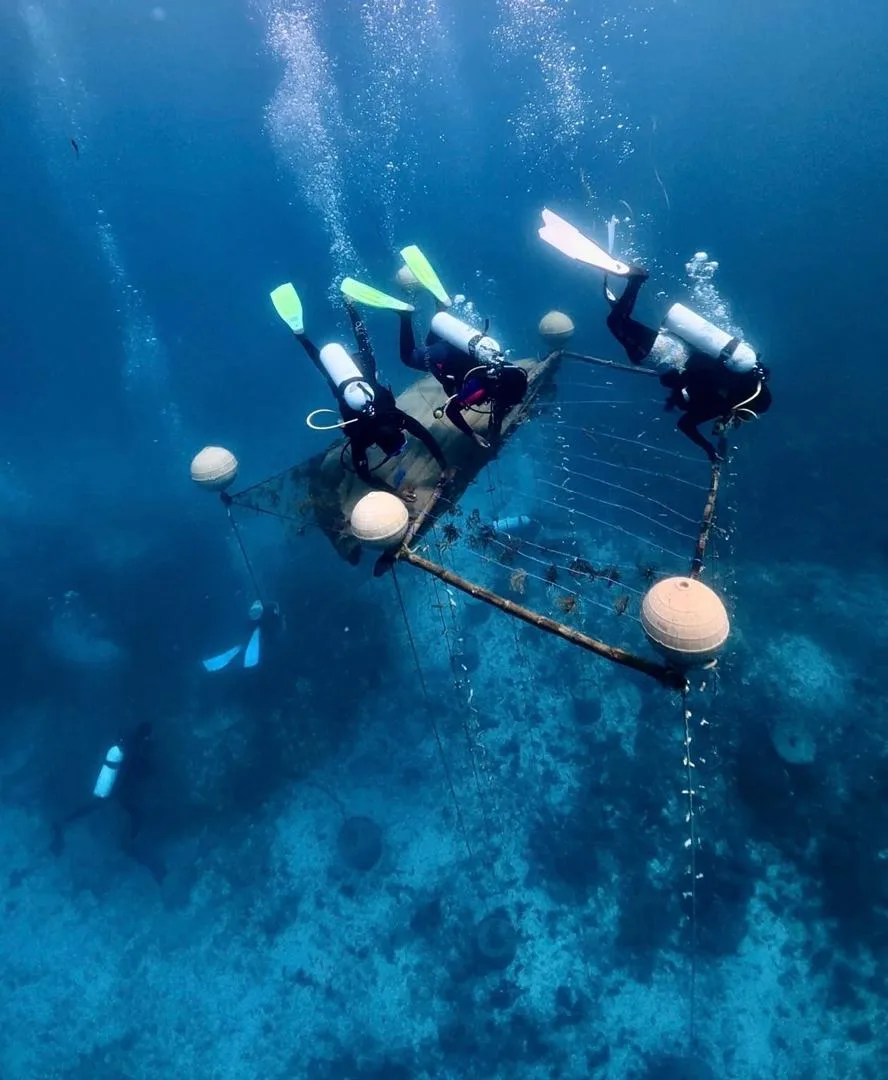
The Sea Farmers Project is an initiative focused on transforming seaweed farming in Tanzania into a more commercial, innovative, sustainable, and environmentally responsible sector. The project is motivated by the observation that many coastal communities depend on marine resources for their livelihoods, yet seaweed farming still faces challenges such as low productivity, limited innovation, climate change, inconsistent market demand, weak commercial structures, and insufficient involvement of young people. The project therefore aims to build a stronger connection between economic opportunity, sustainable farming, and ocean conservation. A major focus of the project is to prepare seaweed farmers to operate at a commercial level. Instead of viewing seaweed farming only as a small-scale livelihood activity, farmers would be trained to consistently produce seaweed that meets the quality, quantity, and supply requirements of commercial buyers and processing companies. This includes understanding the preferred seaweed varieties, required quality standards, nutrient levels, proper harvesting techniques, cleaning, drying, storage, transportation, and laboratory testing. Reliable production would allow farmers to access more stable markets and potentially receive better and fairer prices for their products. The project also emphasizes the importance of creating a clear relationship between farmers and buyers. Companies purchasing seaweed should clearly communicate how much seaweed they require each month, the quality they expect, how frequently they will purchase, the number of farmers they intend to work with, and the price offered per kilogram. This would help farmers plan their production more effectively and reduce uncertainty within the supply chain. Another important goal is to encourage the participation of young people, particularly those between 18 and 35 years old. The project recognizes youth as an important part of the future of Tanzania.
Read moreLet's work together
Let's build with the ocean, together.
Work with a team connecting ocean restoration, enterprise, and community prosperity.